Vervy Lin Cosmetics
Beauty ODM, OEM and OBM services

The words ODM, OEM and OBM get used loosely in this industry. They describe who owns the formula, who owns the risk, and who is accountable when a batch arrives late. Here is how we define them, and how we decide which one a brand actually needs.
| Model | Formula ownership | Who carries development risk | Typical first MOQ | Time to first run | Best suited to |
|---|---|---|---|---|---|
| Consultancy | Stays with your existing suppliers | You retain it, with a written assessment of where it sits | Not applicable | 2–10 weeks | Founders validating a concept, a quote or a formulation before committing capital |
| ODM | Developed by us, licensed to you | Shared — we carry technical development | 1,000–3,000 units per SKU | 14–22 weeks | Brands wanting a differentiated range quickly, without building a lab relationship |
| OEM | Yours, or your laboratory’s | You, with our manufacturing oversight | 1,000–5,000 units per SKU | 12–20 weeks | Brands with a formula or a formulator already in place |
| OBM | Developed by us, assigned or licensed on agreed terms | Ours, end to end | 1,000–3,000 units per SKU | 16–26 weeks | Retailers, salon groups and founders launching a label from zero |
Choose a model
Which one fits the stage you are at?
Read across the four descriptions. If two seem to apply, the earlier stage is almost always the right starting point.
An independent read
A fixed-scope assessment of concept, formula, packaging, supplier quotes and compliance route. Useful before you sign anything.
Our formula, your brand
We develop the formulation and the technical file; you take an exclusive licence for your market. The fastest route to a defensible range.
Your formula, made properly
You keep the IP. We qualify the site, run the trials, control quality and hold the batch documentation.
A brand, built end to end
Concept through to first delivery, including packaging design coordination and launch assets. For retailers and founders starting from nothing.
How we decide
Six questions we ask before quoting.
They are the same six a retailer's technical team will ask later, so it is worth answering them early.
- Does the formula need to be defensible, or does it need to be good? A stock base with a strong story can outperform a bespoke formula nobody can substantiate.
- Is there a lab relationship already? Existing development work changes the OEM case entirely.
- What is the realistic sell-through in the first twelve months? MOQ should follow demand, not the other way round.
- Which claims will appear on the front of the pack? Claims drive testing, and testing drives cost and timeline.
- Is the pack a stock component or a new tool? Tooling is the most common hidden line in a first-run budget.
- Which market, exactly? Great Britain, Northern Ireland and the EU are now three separate compliance routes.
Most brands arrive asking for a manufacturer. What they usually need first is a decision about the product: which SKU leads, what it costs to make at a realistic volume, and which claim justifies the price. That work takes two weeks and saves months.
Quote a project before we understand the category economics. Take a commission from a factory and call it advice. Promise a retail listing. Launch a product we cannot document.
Included in every model
The parts that do not change.
Whichever route you take, these are non-negotiable and are priced in from the start.
One accountable lead
A single named contact who owns the timeline across lab, packaging, fill and compliance. No forwarding.
Documentation as standard
Formula record, specifications, safety report inputs and batch documentation held in a structure a trading standards officer can follow.
Compliance before print
Artwork is checked against the safety report and the GB annexes before plates are made, not after the cartons land.
Honest numbers
Landed cost including freight, duty, testing, tooling and packaging EPR exposure — not just the ex-works unit price.
In practice
What the work looks like once it starts.
The models above describe the commercial route. In the room, it is range planning, client conversations and a partnership that outlasts the first order.


Questions
What founders ask us first.
What is the difference between ODM, OEM and OBM?
OEM means you supply the formula and we manufacture to it. ODM means we develop the formula and license it to you. OBM means we build the brand with you — concept, formulation, packaging, compliance and first production. The commercial difference is who owns the technical IP and who carries development risk.
Can you work with a manufacturer we already use?
Yes. A large part of our OEM work is oversight of an existing relationship: qualifying the site, tightening specifications, resolving a quality deviation or preparing documentation for a retail technical audit.
Do we own the formula?
Under OEM, always — it is yours. Under ODM, you receive an exclusive licence for your market, with assignment available when you need outright ownership. The position is agreed in writing before development starts, not after.
What is the smallest order you will take?
Around 1,000 units per SKU for a custom formulation in a stock pack, and 3,000 or more where the format is complex, the pack is tooled, or the product is an aerosol. Stock formulations with your own labelling can start lower.
Do you provide a UK Responsible Person?
We coordinate the appointment of a GB-established Responsible Person and prepare the technical file that supports them. We are not ourselves GB-established, and we will never present a Dubai address as a UK one — that distinction matters to OPSS and to your retailer.
How much does a project cost?
Development, testing, packaging, tooling and freight are quoted separately so you can see what each decision costs. We will give you a written range after the assessment, before any development work is authorised.
Further reading
Choosing an engagement model.
 Engagement models
ODM vs OEM vs OBM: which model fits your beauty brand
The three acronyms describe ownership and risk, not quality. A decision framework for choosing between them.
20 October 2026 · 4 min read Compliance
Making cosmetic claims that survive scrutiny in the UK
What "clinically proven" actually requires, which claims need instrumental data, and the wording that quietly turns a cosmetic into a medicine.
10 November 2026 · 4 min read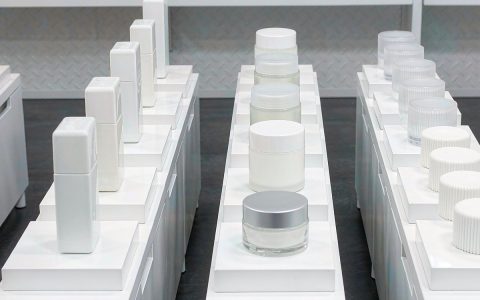 Cost and MOQ
What it really costs to develop a skincare product in the UK
A line-by-line budget, the retail maths that constrains it, and the four costs that appear after you have committed.
3 November 2026 · 4 min readNext step
Wherever you are based, start with a conversation — not a purchase order.
Tell us what you are building, where it needs to land and which suppliers you already have. We will come back with an honest view of feasibility, timings, indicative costs and the compliance route — usually within two working days.
info@vervylincosmetics.comWritten enquiries are answered by the founder, not a sales desk.
+971 50 648 9197Sunday to Thursday, 09:00–18:00 GST
Dubai, United Arab EmiratesUK meetings by appointment.